Are you fed up with high energy bills and chilly rooms? The right ceiling insulation r value can change your home’s comfort and energy use. Many people find it hard to pick the best insulation, unsure of which r value chart to follow.
I’ll explain what ceiling insulation r value really means. This guide will help you choose the right insulation for your attic, garage, or basement. It’s all about saving money and keeping your home cozy all year.
Understanding R-Value and Why It Matters for Your Home
Understanding r value is key to a comfortable and energy-efficient home. Building insulation r values help keep your home’s temperature stable. This also cuts down on energy costs.
R value acts like a shield for your home against extreme temperatures. The higher the r value, the better your insulation blocks heat. This keeps your home warm in winter and cool in summer, saving your HVAC system’s energy.
What R-Value Measures in Insulation Performance
R-value is a scientific measure of how well insulation resists heat flow. Here’s why it’s important:
- Measures thermal resistance of insulation materials
- Higher numbers indicate better insulation performance
- Calculated by material thickness and thermal conductivity
How R-Value Affects Your Energy Bills and Comfort
Proper insulation with the right r value boosts your home’s energy efficiency. Bad insulation causes:
- Higher energy bills
- Uncomfortable temperature swings
- More strain on heating and cooling systems
Investing in high r value insulation makes your home more comfortable. It also keeps energy costs low. The right insulation can save you money and make your home more comfortable.
Ceiling Insulation R Value: The Complete Guide
Knowing about ceiling r value insulation is key to keeping your home energy-efficient. It helps control heat and keeps your space comfy. Each part of your home needs a specific insulation strategy for the best thermal performance.
The right r-values for ceiling insulation are usually between R-30 and R-60. This depends on several important factors:
- Geographic location and climate zone
- Type of ceiling (attic, garage, basement)
- Age of the home
- Existing insulation materials
Heat rises, making your ceiling a key barrier against heat loss in winter and heat gain in summer. Good insulation can cut down energy costs and boost home comfort.
Choosing the right r-value means knowing your local climate. Colder areas need higher r-values than warmer ones. Energy auditors can guide you to the best insulation for your home.
When picking ceiling insulation, consider these:
- Check your local climate zone
- Look at your current insulation
- Think about energy savings
- Pick the right insulation material
Good ceiling insulation is more than just keeping warm or cool. It’s about making your home energy-efficient, saving money, and improving comfort.
R-Value Requirements by Climate Zone in the United States
Knowing the right r value insulation for your ceiling depends on your climate zone. The U.S. has eight climate zones, each needing different insulation levels. These levels affect how well your home uses energy and stays comfortable.

Identifying Your Climate Zone on the DOE Map
Finding your climate zone is key to choosing the right insulation. The Department of Energy (DOE) has a detailed map for this. It shows your area’s zone, from Zone 1 (warmest) to Zone 8 (coldest). Most of the country falls between Zones 2-7.
- Zone 1: Southern Florida, Hawaii (warmest)
- Zone 2-3: Southeastern and Gulf Coast states
- Zone 4-5: Central and Northern states
- Zone 6-8: Northern and Alaska regions (coldest)
Regional Differences in Insulation Recommendations
Insulation needs change a lot by climate zone. In colder areas, you need more insulation to keep heat in. In warmer zones, you want to keep heat out. The 2021 International Energy Conservation Code gives specific rules for each zone.
| Climate Zone | Recommended Attic R-Value |
|---|---|
| Zone 1-2 (Warm) | R-30 to R-49 |
| Zone 3-4 (Moderate) | R-38 to R-60 |
| Zone 5-8 (Cold) | R-49 to R-60 |
Always check with local building departments or energy experts for your area’s insulation needs. The right insulation can save a lot on energy and make your home more comfortable.
Recommended R-Values for Attic Ceiling Insulation
Attic spaces need special care when it comes to insulation. Your attic plays a big role in keeping your home energy-efficient. The right r-value depends on your climate zone in the United States.
Different areas need different insulation levels. Here’s what works best in each region:
- Zone 1-2 (Warm Regions): R-30 to R-49 recommended
- Zone 3-4 (Moderate Regions): R-38 to R-60 suggested
- Zone 5-8 (Cold Regions): R-49 to R-60 essential
Uninsulated attics need more insulation than spaces with some already. For example, an attic in Zone 4 without insulation might need R-60. But, if there’s 3-4 inches of insulation, aiming for R-49 is better.
Experts say these r-values help your home stay warm or cool better. The right insulation can cut down on heating and cooling costs. This makes your home more comfortable.
But, remember, how well insulation works also depends on how it’s installed. Even the best insulation won’t do its job if it’s not put in right.
What R Value Insulation for Garage Ceiling Works Best
Choosing the right insulation for your garage ceiling is key to your home’s energy efficiency and comfort. The r-value needed depends on if your garage is attached or detached and how you use it.
Read also: Exposed Garage Ceiling Insulation
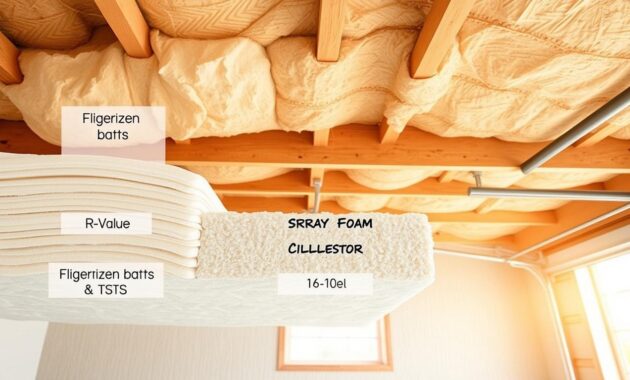
Insulation for garage ceilings isn’t a one-size-fits-all solution. The right approach depends on your specific situation.
Read also: Insulate Garage Ceiling With Foam Board
Attached vs Detached Garage Insulation Needs
Different garages need different insulation:
- Attached Garages: Need higher r-value insulation
- Detached Garages: May need less insulation
Cost-Effective Garage Ceiling Solutions
When looking at insulation options, consider these factors:
- Your home’s climate zone
- The garage’s intended use
- Your budget
| Garage Type | Recommended R-Value | Typical Insulation Material |
|---|---|---|
| Attached Garage (Living Space Above) | R-30 to R-38 | Fiberglass Batts |
| Attached Garage (No Living Space) | R-13 to R-19 | Spray Foam |
| Detached Garage | R-19 to R-30 | Blown-In Insulation |
For attached garages, with or without living spaces, I highly recommend insulation. The right r-value can cut energy costs and boost home comfort.
Basement Ceiling Insulation R Value Standards
Homeowners face unique challenges when choosing basement ceiling insulation. The choice depends on whether your basement is heated or not. Insulating the ceiling helps keep temperatures comfortable and lowers energy bills.
For unheated basements, the needed insulation R-value changes with the climate zone:
- Zones 1-2: R-13 floor insulation
- Zone 3: R-19 floor insulation
- Zones 4-8: R-19 to R-38 floor insulation
The right insulation for your basement ceiling depends on where you live. Colder areas need higher R-values to stop heat loss. Sometimes, insulating the walls is more effective than the ceiling.
| Climate Zone | Recommended R-Value | Insulation Type |
|---|---|---|
| Zones 1-2 | R-13 | Fiberglass Batts |
| Zone 3 | R-19 | Fiberglass or Foam |
| Zones 4-8 | R-19 to R-38 | Spray Foam or Rigid Foam |
Insulating the basement ceiling can be tricky due to plumbing and ductwork. If you’re turning your basement into living space, consider wall insulation over ceiling.
R-Value Chart: Quick Reference for Ceiling, Attic, Garage and Basement
Choosing the right insulation can seem hard, but I’ve made a simple r value chart for you. Knowing the best fiberglass insulation r value for your home is key. It helps save energy and keeps you comfortable.
Let’s look at the main insulation types and what they do. This will help you choose wisely.
Comparing Insulation Materials
Insulation materials vary in how well they keep heat out. Here’s a quick look:
- Fiberglass Batts: R-3.2 to R-3.8 per inch
- Blown-in Fiberglass: R-2.2 to R-2.9 per inch
- Cellulose: R-3.2 to R-3.8 per inch
- Spray Foam (Closed-Cell): R-6 to R-7 per inch
Calculating Total R-Value for Multi-Layer Installations
Adding up the r value for your insulation is easy. Just add the values of each layer. For example, R-19 plus R-30 equals R-49.
| Insulation Material | R-Value per Inch | Best Used For |
|---|---|---|
| Fiberglass Batts | R-3.2 – R-3.8 | Walls, Attics |
| Spray Foam | R-6 – R-7 | Difficult Spaces, High Performance |
| Cellulose | R-3.2 – R-3.8 | Eco-Friendly Insulation |
Pro tip: Don’t forget to count all layers when adding up your r value. This includes any sheathing or drywall, even if they don’t add much.
How to Increase R-Value in Existing Ceiling Insulation
Boosting your home’s ceiling insulation r-value doesn’t always mean replacing everything. I’ll share some easy ways to make your insulation better and save energy.
Start by checking your ceiling insulation. Measure how thick it is and what it’s made of. This will tell you your current r-value. Many older homes need more insulation than today’s standards.
- Check existing insulation thickness
- Calculate current r-value
- Determine target r-value for your climate zone
Adding more insulation to attic spaces can really help. Place new insulation on top of the old one, but at a right angle. This way, you avoid squishing the old insulation and get the best thermal protection.
Here are some important tips for increasing your ceiling’s r-value:
- Use unfaced insulation for the top layer
- Maintain proper ventilation
- Install baffles at eaves to prevent soffit vent blockage
- Avoid compressing existing insulation
Insulating basement and garage ceilings can be tricky. If your ceilings are finished, you might need a pro. Always talk to an energy efficiency expert to find the best solution for your home.
Conclusion
Choosing the right R-value for ceiling insulation is more than a technical decision. It’s about making your home comfortable and energy-efficient. In this guide, we’ve covered key factors like climate zones and ceiling types.
Knowing about R value for walls and ceilings is vital for your home’s thermal performance. The Department of Energy gives good guidelines. But, local building codes and your home’s specifics will decide your insulation plan. Proper insulation is a smart investment that cuts energy costs and boosts comfort.
If you’re tackling insulation yourself or hiring pros, plan carefully. Use R-value charts and climate zone maps as guides. Always talk to local experts who know your area’s insulation needs. With the right steps, you can boost your home’s energy efficiency and comfort.
My last piece of advice? Take your time, research well, and see insulation as a long-term investment in your home. The right R-value can greatly improve your comfort and lower energy bills.