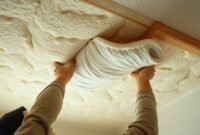
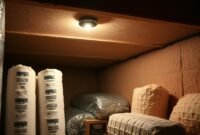
In this guide, I’ll share my journey of finding the best insulation for basement ceiling solutions. Whether you want thermal protection, soundproofing, or both, I’ll help you navigate the perfect insulation approach for your home.
Read also: Should You Insulate Basement Ceiling?
Why I Decided to Insulate My Basement Ceiling
My basement was wasting energy, and I couldn’t ignore it. It was costing me money every season. Insulating the ceiling was essential for a more comfortable home.
Energy Efficiency Benefits I Discovered
I found out that conditioned air was escaping through my basement. The heat from upstairs was disappearing. Insulating the ceiling was a smart move for saving energy and money.
- Reduce heating and cooling costs
- Create a more consistent indoor temperature
- Improve overall home energy efficiency
My energy bills showed how much I was wasting. With insulation, I could keep my home warmer in winter and cooler in summer. This would save a lot of energy.
Sound Control Between Floors
The noise between my basement and upstairs was too much. Every sound echoed through the house. I needed to soundproof the ceiling for my home office and play area.
The right insulation would make my home quieter and more peaceful. I was looking for a solution that would block sound and save energy.
Understanding R-Value and STC Ratings for Basement Insulation
When I started looking into basement ceiling insulation, I quickly learned about R-value and STC ratings. The basement ceiling r-value is not just a number. It shows how well your insulation keeps your home stable against temperature changes.
R-value shows how well insulation stops heat from moving. For basement ceiling insulation, you’ll often see R-13 to R-30. This depends on your area’s climate and your home’s needs.
- R-13: Suitable for mild climates
- R-19: Good for moderate temperature zones
- R-30: Ideal for colder regions
But insulation does more than just keep your home warm. STC (Sound Transmission Class) ratings tell you how well insulation blocks sound. When picking insulation for your basement ceiling, remember a high STC rating is key for a quiet home.
| STC Rating | Sound Blocking Performance |
|---|---|
| 25-30 | Normal speech can be heard |
| 35-40 | Loud speech somewhat unintelligible |
| 45-50 | Loud sounds barely audible |
My advice? Don’t just look at the basement ceiling r-value. Think about both heat and sound to make your space the most comfortable it can be.
Fiberglass Batt Insulation for Basement Ceiling
Fiberglass batts are a top pick for basement ceiling insulation because they’re affordable. My research showed they’re a great choice for many reasons.
Fiberglass insulation is easy to use and won’t break the bank. It’s perfect for those who like to DIY or are watching their budget. It’s great for keeping your basement warm and quiet.
Cost-Effective Sound Attenuation
Fiberglass batts are amazing at blocking sound. They trap sound waves, making your basement much quieter. I tested it and saw a big drop in noise from upstairs.
- Excellent noise reduction properties
- Near-perfect noise reduction coefficient (NRC) rating
- Affordable sound control solution
Limitations in Thermal Performance
But, fiberglass insulation isn’t perfect for keeping warm. It doesn’t seal tight, so air can sneak in. It has R-values from R-13 to R-21, but it’s not enough to keep all the heat in.
| Insulation Characteristic | Fiberglass Batt Performance |
|---|---|
| Sound Reduction | Excellent (NRC close to 1.0) |
| Thermal Protection | Moderate (R-13 to R-21) |
| Air Sealing | Limited |
To get the best results, use fiberglass batts with other sealing methods. Spray foam or caulking around band boards can help. This combo boosts both warmth and quiet in your basement.
Mineral Wool and Rockwool: My Experience with Dense Insulation
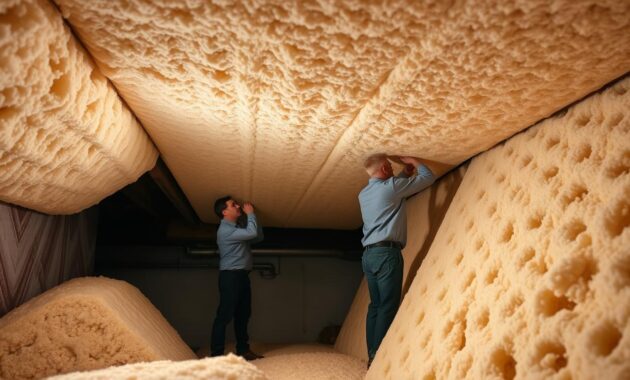
When I looked into basement insulation, Rockwool stood out. It’s a dense mineral wool that offers more than regular insulation. It’s great for keeping moisture out and blocking sound.
I found several benefits of using Rockwool in basement ceilings:
- Superior sound absorption with high NRC ratings
- Fire-resistant properties
- Water-repellent characteristics
- Excellent thermal performance
One big question I had was: do you need a vapor barrier with Rockwool? Rockwool can handle some moisture, but basements need extra care. It doesn’t cause mold, but extra protection might be needed based on humidity.
My research showed Rockwool works well in basements. It fits tightly between joists, keeping insulation consistent. Its stone base makes it durable against the elements.
For those thinking about basement insulation, Rockwool is a strong option. It tackles sound, temperature, and moisture issues. This makes it a great choice for cozy, energy-saving basements.
Open Cell Spray Foam: Balancing Soundproofing and Air Sealing
When I looked for the best spray foam for basement ceilings, I found open cell spray foam. It’s a game-changer. This insulation method offers benefits beyond what traditional insulation does.
My search for the best insulation for basement ceilings led me to open cell spray foam. It has amazing qualities. Unlike other insulation, it creates a complete barrier against many home comfort issues.
Creating an Airtight Barrier
Open cell spray foam is great at sealing air. Its special properties allow it to:
- Fill tiny cracks and crevices completely
- Stop air infiltration from multiple directions
- Provide superior thermal resistance
- Reduce energy loss through ceiling gaps
Professional Installation Requirements
Open cell spray foam has many benefits, but it needs a pro to install it right. Trying to do it yourself can cause big problems. That’s why getting an expert is key.
| Installation Aspect | Professional Approach | DIY Risks |
|---|---|---|
| Application Precision | Exact coverage and thickness | Uneven application |
| Safety | Proper protective equipment | Chemical exposure risks |
| Cost | Higher initial investment | Potential costly mistakes |
Professional installers make sure it works best. They tackle basement ceiling problems with skill and care.
Closed Cell Spray Foam for Maximum Thermal Protection
When I looked for the best insulation for my basement ceiling, closed cell spray foam stood out. It’s known for its top-notch thermal protection. This insulation has unique benefits that make it a standout choice.
Closed cell spray foam has an impressive R-value of 6-7 per inch. This means you need less of it to get great insulation. It’s perfect for older homes with moisture issues, making it a top pick for insulating basement walls.
- Highest R-value per inch of any insulation type
- Creates an impermeable moisture barrier
- Ideal for high-humidity basement environments
- Provides structural reinforcement
The density of closed cell spray foam is a game-changer for basement insulation. It creates a tight seal that stops heat and moisture. This is key for basements that might be damp or have stone or dirt floors.
But, this premium insulation has some downsides. It needs a pro to install, and it’s more expensive than other options. While it’s great at keeping things warm, it doesn’t block sound well.
For homeowners facing tough basement challenges, closed cell spray foam is a smart investment. It’s a long-term solution for saving energy and controlling moisture.
Best Insulation for Basement Ceiling: My Top Recommendations
I’ve done a lot of research and tried different options. I’ve created a guide to help you pick the right insulation for your basement ceiling. The best choice depends on your needs, budget, and the state of your basement.
Matching Insulation Type to Your Specific Needs
When picking insulation for your basement ceiling, think about these important points:
- Soundproofing priority: Mineral wool or open cell spray foam
- Thermal performance: Closed or open cell spray foam
- Budget constraints: Fiberglass batts for cost-effective solution
Navigating Moisture and Humidity Challenges
Choosing the right insulation for your basement ceiling means managing moisture well. Basements often have high humidity and can get water. Before you start, I suggest:
- Check for any moisture problems
- Fix drainage and waterproofing
- Think about if you need a vapor barrier
Closed cell spray foam is a top choice. It insulates well and keeps moisture out. It seals tight, stopping moisture and keeping your space warm.
My best advice? Look at your needs, budget, and moisture levels. For many, closed cell spray foam is the best. It’s great for keeping warm, quiet, and dry.
Rigid Foam Insulation Boards and Polyiso Options
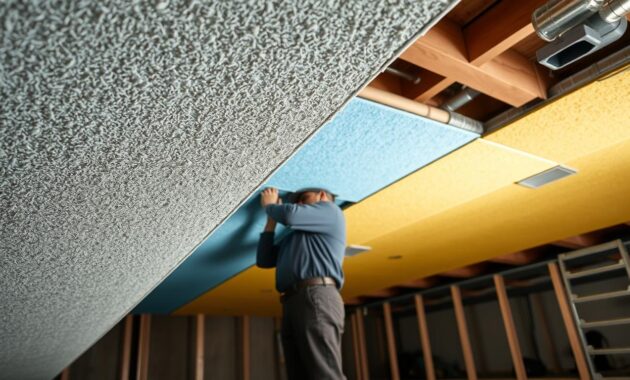
Exploring rigid foam insulation for basements, I found a big change in ceiling insulation. Polyiso (polyisocyanurate) boards stood out for my project. They offer great thermal performance in a small size.
Read also: How to Make Rigid Foam Insulation Noise Reduction?
These boards have many benefits. They have high R-values, from R-6 to R-6.5 per inch. This means they protect well without taking up too much space. I found several key advantages:
- Slim profile ideal for low-ceiling basements
- High moisture resistance
- Easy DIY installation
- Versatile application between ceiling joists
Looking into how to cover insulation in basement ceilings, polyiso boards offer unique solutions. Some have finished facers for a nice look if you want to show the ceiling. For extra protection, you can cover them with drywall.
Products like Rmax Pro Select and TSX-8510 caught my eye. They make a strong thermal barrier, cutting down on heat transfer and energy costs. They also help with sound dampening, but they’re mainly for thermal performance.
Pro tip: When installing rigid foam insulation, seal the joints with tape or caulk. This step makes the insulation work better by keeping air out.
Read also: How to Install Rigid Foam Insulation under Metal Roof?
Installation Costs and DIY Considerations I Weighed
Exploring basement insulation costs can be complex. Finding the right insulation means balancing your budget with long-term benefits. The cost varies a lot based on the insulation type you choose.
- Fiberglass batts: Most budget-friendly option at $0.50-$1.50 per square foot
- Mineral wool: Slightly pricier at $1.00-$2.50 per square foot
- Open cell spray foam: Professional installation ranges $1.50-$3.00 per square foot
- Closed cell spray foam: Premium option costing $2.50-$5.00 per square foot
Budget-Friendly vs. Premium Solutions
My cost analysis looked beyond the initial price. I considered how insulation could save energy over time. Spray foam, for example, could cut heating bills by 15-25% each year.
DIY was a big part of my decision. At first, I wanted to save by doing it myself. But, some jobs need a pro. I decided on a mix: spray foam for key spots and batts for the rest.
In the end, the right insulation depends on your budget, energy goals, and comfort with DIY.
Conclusion
Exploring basement ceiling insulation options shows that there’s no one-size-fits-all solution. Each home has its own set of challenges. The best insulation depends on your needs, budget, and basement’s condition.
Mineral wool and open cell spray foam are top choices for soundproofing. Closed cell spray foam and rigid foam boards lead in thermal performance. If you’re on a budget, fiberglass batts and air sealing can work well too.
It’s important to know what you want most. Do you want to save energy, reduce noise, or control moisture? Look at your basement’s current state and consider getting professional advice. You can also try some DIY projects.
Doing your homework on R-value and STC ratings will help you find the best insulation. The right choice should match your needs, budget, and long-term comfort.